










Dude1x3
-
Număr conținut
217 -
Înregistrat
-
Ultima Vizită
-
Zile Câștigate
1 -
Country
Statele Unite ale Americii -
Points
50 [ Donate ]
Tip conținut
Profiluri
Forumuri
Calendar
Orice postat de Dude1x3
-
★ Real Name:Mustafa ★ Nickname:Dude1x3 ★ Age: 19 ★ STEAM (ON/OFF):OFF ★ WARGOD TEST (not mandatory): ★ Are you aware that you must always be on teamspeak3 when playing on the server/?:yes ★ Are you aware that if you cause problems for the server you can lose your Vip-silver?:yes ★ How many hours have you been on the server / How many days have you been playing?:i started today but ill play daily, i also played this nestle srv in 2024.
-
fotball [Football] match-fixing & betting scandal in turkey
Dude1x3 a postat un topic în Știri despre Sport
What’s the shocking football news: match-fixing & betting scandal in Turkey The Turkish Football Federation (TFF) has suspended 149 referees and assistant referees after an investigation found many were involved in illegal betting on football matches. (Reuters) According to TFF, out of 571 active professional-level referees, 371 had accounts with betting companies, and 152 were actively gambling on matches — a clear violation of integrity rules for football officiating. (Reuters) In extreme cases, one referee was reported to have placed more than 18,227 separate bets, and dozens placed wagers on over 1,000 matches each over recent years. (Reuters) What happened next — arrests, player suspensions, and a crisis of faith On November 7, 2025, prosecutors in Turkey issued detention orders for 21 individuals — including 17 referees and the chairman of a Super Lig club — as part of a criminal investigation into alleged match-fixing and gambling-related offenses. (Reuters) By then, 18 of the 21 had already been detained, marking one of the biggest crackdowns in football history. (Reuters) The scandal widened dramatically: the TFF referred 1,024 players from across its leagues for disciplinary review; among them, 27 were from the top–tier Super Lig. (The Guardian) Subsequently, bans have been imposed on 102 players (from both top-tier and second-tier leagues) — some for 45 days, others up to 12 months — while investigations continue. (Reuters) Why this is a BIG deal — implications for football integrity Referees — the guardians of fairness — are accused of undermining the game. A betting scandal among officials shatters the foundation upon which fans, clubs and players rely: impartiality and trust. The scale is unprecedented — hundreds of referees, over a thousand players implicated. This isn’t a fringe affair but a systemic crisis impacting entire leagues. Legal & reputational consequences — arrests, ongoing criminal investigations, and severe bans threaten not just individual careers, but the credibility of whole clubs and possibly entire competitions. Fan and club backlash — Clubs in Turkey have already voiced outrage; fans might lose faith in match outcomes, potentially harming attendance, broadcast revenues, and the overall image of Turkish football internationally. (The Indian Express) What this means going forward — what to watch out for Wide-ranging investigations: Authorities say they might expand the probe to include not just referees, but also coaches, club executives and commentators. (Reuters) Long-term reforms: The TFF and other stakeholders will likely face pressure to overhaul governance, introduce stricter oversight, transparency and possibly support from international bodies (like UEFA / FIFA) to restore trust. Impact on competitions: Matches officiated by implicated referees, or involving banned players, might be re-examined — which could lead to annulled results, playoffs annulled or replayed, or long-term damage to club and league reputations. A wake-up call for global football: This scandal may trigger similar investigations elsewhere — showing that even top-tier leagues are not immune to corruption, and that integrity must be actively protected. Link------->https://www.reuters.com/sports/soccer/turkey-orders-arrest-17-referees-club-president-betting-probe-2025-11-07/?utm_source=chatgpt.com -
[Joc] Cine posteaza urmatorul?
Dude1x3 a răspuns la topic lui PinkyQueen @ LCS în Jocuri Forumistice
no @FHISKER? -
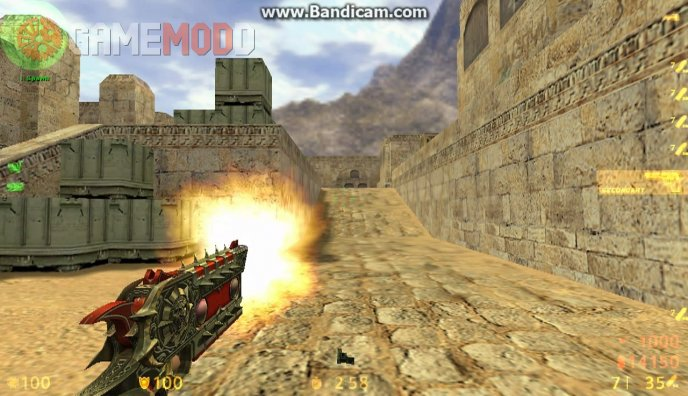
Skin name: Desert eagle crimson hunter Author Skin: Nexon and Dean AMX Download link:https://www.gamemodd.com/engine/download.php?id=331 Pictures:
-
Did you know that honey never spoils? Archaeologists have discovered jars of honey in ancient Egyptian tombs that are over 3,000 years old and still perfectly edible. This is because honey has natural preservatives, low moisture, and high acidity, which prevent bacteria from growing. It’s one of the rare foods that can last forever, making it both fascinating and unique.

-
Xbox November 2025 Update — This latest update from Microsoft brings several improvements to the Xbox ecosystem: a new “Gaming Copilot” (AI-assistant) is now available on the Xbox mobile app, letting players get game help via voice or text in real time. (Gadgets 360) It also expands the “full-screen experience” to more Windows devices, improving UI and navigation for PC players. (Gadgets 360) Moreover, the update enhances cloud-streaming support (e.g. 1440p streaming) and broadens mouse/keyboard + touch-control support for many games — giving more flexibility to how and where you play. (Gadgets 360) CLICK ME
-
Denumire skin: T-001 Zombie Autor Skin: d3ath2435 Link download: https://cs-bg.info/get/skin/3451/ Imagini: CLICK ME
-
What is Google Antigravity Antigravity is an AI-powered integrated development environment (IDE) released by Google, with public preview starting around November 18, 2025. (Wikipedia) Unlike a traditional IDE (or even the more recent “AI-assisted code editors”), Antigravity adopts what it calls an "agent-first" paradigm. That means it doesn’t just help autocomplete or suggest code — it lets autonomous AI agents plan, write, test, and validate code. (Google Developers Blog) The agents in Antigravity are powered by state-of-the-art large-language models (LLMs), especially Gemini 3 Pro from Google — but Antigravity also supports other models such as Claude Sonnet 4.5 (from Anthropic) and open-source model variants (e.g. some from OpenAI). (Wikipedia) It works on Windows, macOS, and Linux. (Wikipedia) In short: Antigravity is a next-gen IDE designed for the age of “agentic AI” — where AI agents, not just humans, do meaningful parts of software development. Why Many Consider It Among the Best / Most Promising Software of 2025 Antigravity stands out for several reasons: Autonomous, not just assistive — Typical AI-powered editors (or copilots) mainly autocomplete code or suggest snippets. Antigravity’s agents go further: you can describe a feature in high-level natural language (“Build a login API + UI + tests + Docker config”), and the agents will attempt to plan, code, test, and validate the full feature across editor, terminal, and even a browser. (Google Developers Blog) Multi-agent orchestration & parallel work — You aren’t limited to a single assistant. In Antigravity, you can spawn multiple agents working simultaneously on different tasks (e.g. one agents writes frontend UI, another writes backend API, another writes tests). This can dramatically speed up development, especially for larger projects or teams. (geekboots.com) End-to-end workflows + real testing/validation — Beyond just generating code, Antigravity’s agents can launch a browser, run the app, test UI flows automatically, take screenshots or recordings (“artifacts”), and report results. So it tries to close the loop from “idea → code” to “working software.” (Google Antigravity IDE) Accessibility & free preview — At launch, Antigravity comes as a free public preview, without payment required for individuals (with “generous rate limits”). That lowers the barrier for developers worldwide (including in countries like yours) to try out cutting-edge AI-assisted development. (Google Developers Blog) Potential for shifting software development norms — Because Antigravity abstracts away many manual coding tasks and low-level boilerplate, it could radically change how software is built: from human-typed code line by line to more vision/intent → agentic execution. Many observers think we’re witnessing a paradigm shift in 2025-2026 dev practices. (Google Developers Blog) Given these points, many developers, teams, and even companies are calling Antigravity a “next-generation” IDE — possibly the future standard for coding. What Antigravity Brings to Your Table (Main Features) Here’s a breakdown of core features / capabilities that make Antigravity powerful: Feature / CapabilityWhy It Matters Agent Manager + multi-agent orchestrationAllows parallelization: e.g. frontend + backend + tests simultaneously, saving a lot of time on large tasks. (Google Developers Blog) Cross-surface autonomy (Editor + Terminal + Browser)Agents can modify code, run commands, open browser for UI testing — full-stack automation without manual switching. (geekboots.com) Artifact generation (task lists, implementation plans, diffs, browser recordings, automated test results)Instead of just dumping code, Antigravity gives you human-readable deliverables so you can review/approve agent work. (Google Antigravity IDE) Multi-model supportFlexibility to choose the AI model best suited for each task (e.g. maybe Gemini 3 for reasoning, Claude for docs). (Wikipedia) Free for individual developers (during preview)No cost barrier — easy for hobbyists, freelancers, students to experiment/test. (Google Developers Blog) Familiar IDE feel (fork of VS Code)Minimizes learning curve — developers already comfortable with VS Code can transition easily. (Wikipedia) What to Watch Out For — Limitations & Criticisms Even though Antigravity is powerful and promising, it's not perfect. Some of the reported downsides / risks: Agent reliability / bugs: Because it's new and powerful, the agents sometimes make mistakes: corrupted files, buggy code, or code that “works” but is messy or inefficient. Some early-adopter feedback highlights frustrations. (Reddit) Rate limits during preview: While it's free, there are usage limits — for example, quota refreshes every few hours. This might restrict heavy or long-term use until a paid plan or less restrictive version releases. (Reddit) Ecosystem/tooling tradeoffs: Since it’s a fork (like a rebranded version) of a mainstream IDE (VS Code), some plugin compatibility or marketplace limitations may exist compared to fully established IDEs. (Reddit) Not yet “perfect” for all projects: For very large, complex, or specialized codebases, the AI might struggle with context, deep logic, or domain-specific requirements. Also, manual review and human oversight remains essential. (arXiv) Security & trust considerations: When you allow AI agents direct access to your system (terminal, browser, file system), there’s always a risk. As with any AI-assisted tooling — you must treat generated code and agent output with caution, review it carefully before deployment. In short: Antigravity is powerful — but not a “set-and-forget” magic wand. It works best when used thoughtfully, with human supervision. What This Means for the Future of Software Antigravity isn’t just another IDE — many in the software world consider it a harbinger of a shift to “agentic programming.” Here’s how it could impact the near future (2025–2027): Faster development cycles: What used to take days or weeks (building a feature, writing tests, frontend + backend + deployment) could shrink to hours. Lower barrier to entry: Developers with less coding experience — or product builders, designers — may start using natural-language prompts to build real apps. Complex projects become more manageable: With multi-agent orchestration, large codebases and microservices architectures become easier to manage. More automation, less boilerplate: Routine tasks, configuration, testing — everything becomes more automated, reducing human error and freeing developers to focus on architecture, design, and logic. New developer workflows / roles: Developers may shift from “hand-coding everything” to “orchestrating, reviewing & refining AI output” — more like architects or supervisors. This is aligned with broader trends in 2025: use of AI / ML in development, low-code/no-code tools, “AI-first” engineering mindsets, and increasing demand for productivity and scalability in software teams. (intellisourcetech.net) Should You Try Google Antigravity — When It Makes Sense If you are a developer (or learning software development) — especially if you: work on web apps, full-stack, or frontend + backend + UI, or frequently build prototypes or small projects, or want to learn and experiment with cutting-edge AI coding tools, then Antigravity is definitely worth trying. Because the public preview is free (at least for now), you can experiment with minimal risk. However — if you’re working on a mission-critical, large-scale, production-level system, or a project needing high reliability/security — treat Antigravity as a powerful assistant, not a full replacement for manual coding & code review. CLICK ME FOR PICTURE
-
- 1
-

-
- software
- google antigravity
- (și 1 alta)