






MaGek
-
Număr conținut
3244 -
Înregistrat
-
Ultima Vizită
-
Zile Câștigate
35 -
Country
Egipt -
Points
46,935 [ Donate ]
Tip conținut
Profiluri
Forumuri
Calendar
Orice postat de MaGek
-
Linux's main weakness is its monolithic kernel, where gaining Root access grants total control over all system functions at once, whereas Windows uses a more fragmented, token-based privilege system that is harder to fully compromise in one step. Additionally, Linux lacks the out-of-the-box, proactive security (like Windows Defender and built-in EDR) found in Windows, placing the entire burden of defense and manual configuration on the user’s expertise.
-
No single OS will likely "kill" Linux, but Linux is already being replaced in specific high-security niches by "Secure-by-Design" architectures.
-
Legal: Testing your own hardware, your own home network, or a company’s system after they have signed a "Rules of Engagement" or "Penetration Testing Agreement." Illegal: Testing a friend's Wi-Fi (even if they said "sure" verbally), scanning a random website for vulnerabilities, or practicing on public networks.
-
For most organizations, whether governmental or not, Windows is the easiest option.
-
Introduction: Linux is not just an operating system; it's a foundation for cybersecurity professionals worldwide. From open-source transparency to robust security features, Linux offers unparalleled advantages in the realm of digital security. This report explores key ways Linux is utilized for security purposes. 1. Enhanced Security and Stability: One of Linux's primary strengths lies in its open-source nature. The code is constantly scrutinized by a global community, leading to rapid vulnerability detection and patching. Its inherent security architecture, including robust user permissions and discretionary access control, makes it less susceptible to malware than some other operating systems. This stability is crucial for critical security infrastructure. 2. Cybersecurity Tools and Distributions: Linux hosts a vast ecosystem of powerful open-source security tools. Specialized Linux distributions like Kali Linux and Parrot Security OS come pre-packaged with hundreds of tools for penetration testing, vulnerability assessment, and digital forensics. These distributions provide a ready-to-use platform for security professionals to conduct comprehensive security evaluations. 3. Network Monitoring and Analysis: Linux is a preferred platform for network monitoring and analysis. Tools like Wireshark and Tcpdump, which are native to Linux, allow for detailed packet inspection and traffic analysis. This capability is essential for detecting network intrusions, analyzing security breaches, and ensuring network integrity. 4. Digital Forensics and Incident Response: When a security breach occurs, Linux is often the go-to system for digital forensics and incident response. Specialized distributions and tools enable forensic analysts to acquire disk images, analyze file systems, and reconstruct digital evidence. This meticulous process is vital for understanding the scope of an attack and identifying the perpetrators. 5. Secure Hosting and Cloud Infrastructure Source: "The State of Cybersecurity 2024" - Cyber Threat Report by Cybersecurity Ventures (https://cybersecurityventures.com/cybersecurity-market-report/) "Open Source Security: A Guide to Best Practices" - Whitepaper by The Linux Foundation (https://www.linuxfoundation.org/lf-security) "Kali Linux: A Penetration Testing Distribution" - Kali Linux Official Documentation (https://www.kali.org/docs/)
-
Link No Works
-
That's Nice . It turns out that you like calm
-
We're just making the zombies even stronger than they already are. Enough with the madness! You only get three tries, and that's way too many. If you survive two tries, the chance of surviving the third is practically zero for regular players, let alone VIPs.
-
admins have random perk bro . not only armor
-
The debate between Linux and Windows has evolved significantly by 2026. While Windows has made strides with features like WSL2 and enhanced Defender, Linux remains the gold standard for users who prioritize transparency, data sovereignty, and robust security. 1. The Open Source Advantage (Transparency) The most fundamental difference is that Linux is Open Source, while Windows is Proprietary (Closed Source). Linux: The source code is available for anyone to audit. In the security world, "security through obscurity" (hiding the code) is considered a weakness. Linux relies on the Linus’s Law: "Given enough eyeballs, all bugs are shallow." Thousands of developers worldwide constantly review the kernel for vulnerabilities. Windows: The code is a "black box." Users must trust Microsoft to find and fix vulnerabilities. If a back-door exists, only Microsoft (and potentially hackers who find it) knows about it. 2. Superior User Privilege Model Linux was designed from the ground up as a multi-user system with strict permission sets. Root vs. User: In Linux, the "Root" (Admin) account is strictly separated from the standard user. Most malware requires administrative execution to "root" itself into the system. On Linux, a user must explicitly use sudo and enter a password to grant these rights. Windows UAC: While Windows has User Account Control (UAC), many legacy applications still require "Run as Administrator," and many users operate with admin privileges by default, making it easier for ransomware to encrypt the entire drive. 3. Privacy and Telemetry For a CS student, privacy isn't just about "hiding things"; it's about Data Sovereignty. Telemetry: Windows 11 and its successors are known for "phoning home." They collect data on app usage, search queries, and system health to "improve the experience" and serve targeted ads. No Tracking: Most Linux distributions (like Mint, Debian, or Arch) collect zero telemetry. Your data stays on your machine. There are no built-in ads in the start menu and no forced Microsoft Account requirements. 4. Package Management vs. Executables The way you install software on Linux is inherently more secure. Repositories: Linux uses centralized Package Managers (apt, pacman, dnf). Software is cryptographically signed and vetted by the distribution maintainers. The Windows Way: On Windows, users often download .exe or .msi installers from various websites. This is the #1 vector for "bloatware" and "Trojan" infections. 5. Targeted Attack Surface Windows holds roughly 70-75% of the desktop market share, making it the most profitable target for hackers. Writing a virus for Windows yields a much higher "Return on Investment" than writing one for the fragmented Linux desktop market. References & Sources "Linux vs. Windows: Security, Performance, Cost Comparison [2026]" (ComputingForGeeks): A comprehensive breakdown of how Linux dominates in server and cloud security. "The Open Source Security Foundation (OpenSSF) Reports": Technical whitepapers on how open-source collaboration leads to faster patching of "Zero-Day" vulnerabilities. "Windows Telemetry and Privacy Analysis" (Electronic Frontier Foundation - EFF): Historical and current critiques of data collection practices in proprietary operating systems. "Difference between Linux and Windows" (GeeksforGeeks): A technical comparison focusing on kernel architecture and user privilege management.
-
- 10
-

-

-
- linux
- operatingsystem
- (și 1 alta)
-
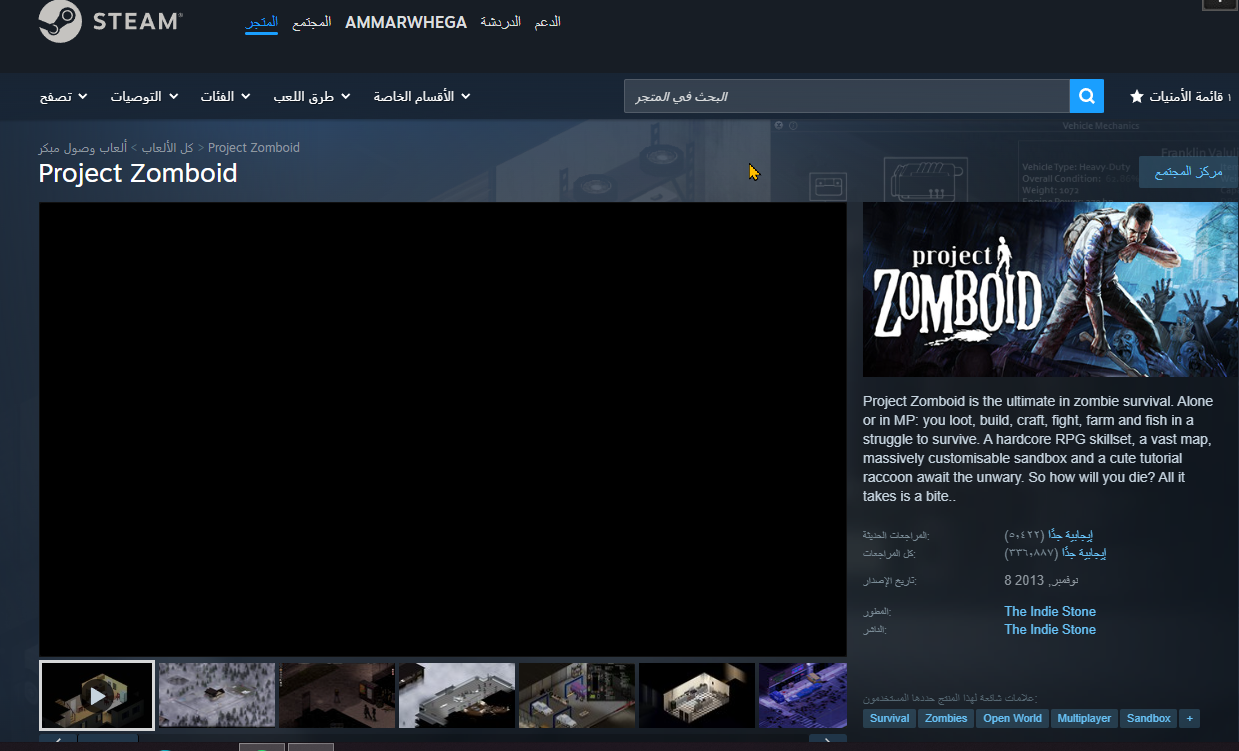
Project Zomboid is an open-world survival horror game that asks one simple, grim question: "This is how you died. How long can you last?" Set in a post-apocalyptic Kentucky (Knox Country), the game focuses on realistic survival rather than high-octane action. 1. Core Gameplay Mechanics Unlike Call of Duty or Among Us, Project Zomboid is punishingly realistic. Survival Stats: You must manage hunger, thirst, fatigue, body temperature, and even boredom or depression. The "Zombies": They are slow (by default), but they follow sound and sight. A single scratch has a chance to infect you, and a bite is a 100% permanent death sentence for that character. Looting & Crafting: You must scavenge houses for food, tools, and planks to barricade windows. Skill Progression: You level up skills like Carpentry, Electrical, and First Aid by performing actions or reading skill books. 2. Current State of the Game (The Build 41 & 42 Era) The game is currently in Early Access, but it is extremely stable. Build 41: This was a massive technical overhaul that introduced 3D animations, a new lighting system, and improved multiplayer netcode. Build 42 (Upcoming): The developers are currently working on a massive update that will add animals, a deeper crafting tech tree (allowing players to go from "stone age" to "industrial age"), and optimized rendering to handle massive skyscrapers and underground basements. 3. Technical Insights (For the CS Student) Engine & Languages: The game is built using Java for the core engine and Lua for the game logic and UI. This makes it incredibly Mod-friendly. In fact, the modding community is one of the largest on Steam. Simulation Depth: The game simulates a power and water grid. After a random number of days, the electricity and water in the world shut off, forcing the player to find generators and rain barrels. Optimization: Even though it looks like a 2D isometric game, every item in every drawer in every house in the entire map is tracked. This requires efficient Data Structure management to ensure the save files don't become bloated. 4. Community & Critical Reception "Overwhelmingly Positive" on Steam: Players praise the game for its depth. It is often called the "most realistic zombie game ever made." Learning Curve: The main criticism is that it is "too hard." New players often die within the first 10 minutes, but for many, that is part of the charm. The "Stories": People love the emergent storytelling. Every death feels like a unique tragic movie. References & Sources The Indie Stone Official Blog (Thursdoid): The primary source for technical updates and development progress on Build 42. Project Zomboid Wiki: An exhaustive database of game mechanics, item IDs, and survival strategies. Steam Community Reviews: A great place to see real-time player sentiment and the most popular mods (like Brita's Weapon Pack). PC Gamer & Rock Paper Shotgun: Both outlets have written extensively on how Project Zomboid's "slow-burn" development resulted in one of the deepest simulations in gaming. Sources https://projectzomboid.com/blog/news/ https://pzwiki.net/wiki/Project_Zomboid_Wiki
-

[Call of Duty]The Launch of a Giant: Call of Duty: Mobile (v1.0.8)
MaGek a postat un topic în Call of Duty Mobile
The first official global version of Call of Duty: Mobile was designed to bring the "Triple-A" console experience to handheld devices. Unlike previous mobile attempts at the franchise, this version successfully unified the Black Ops and Modern Warfare universes into a single mobile engine. 1. Technical Architecture: The Unity Powerhouse While many high-end shooters use Unreal Engine, CODM was built using Unity. Custom Shaders: The developers used highly customized shaders to mimic the "PBR" (Physically Based Rendering) found on consoles, allowing for realistic metal reflections and fabric textures on mobile hardware. Optimization: To ensure the game ran on everything from a budget Android to the latest iPhone, the first version featured an "Adaptive Graphics" system. It dynamically adjusted the resolution and particle effects based on the device's thermal performance. 2. Key Features of the October 2019 Release The initial version was surprisingly robust for a "Version 1.0": Classic Maps: It launched with legendary maps like Nuketown, Crash, Killhouse, Hijacked, and Standoff. The Battle Royale Debut: Unlike the console versions at the time, CODM launched with a massive 100-player Battle Royale map that combined locations from various CoD titles. Iconic Characters: Players could play as Ghost, Price, and Alex Mason from day one. Scorestreaks & Loadouts: The game perfectly replicated the "Pick-10" style loadout system and classic streaks like the UAV and Predator Missile. 3. Software Engineering Challenges From a Computer Science perspective, the launch faced two major hurdles: Matchmaking Latency: In the first week, over 100 million players joined. The backend infrastructure (hosted on AWS and Tencent servers) had to handle massive concurrent requests for "Matchmaking," which uses complex algorithms to balance player skill (SBMM) and ping. Anti-Cheat System: Since the game was free-to-play, it was a target for "Script Kiddies." The first version introduced an early version of an automated anti-cheat that looked for "Impossible Inputs" (like 100% headshot accuracy over long distances). References & Sources Unity Technologies Blog: "How TiMi Studios brought Call of Duty to Mobile" – A deep dive into the engine's optimization. Activision Investor Relations (Q4 2019 Report): Provides the official data on the 100 million+ downloads in the first month. Digital Foundry Analysis (October 2019): A technical performance review comparing the mobile graphics to the Xbox 360/PS3 era CoD titles. CharlieIntel: A leading Call of Duty news site that archives the original patch notes for v1.0.8. Sensor Tower: For data regarding the Day 1 revenue and regional performance (especially in markets like Egypt and the US).-
- 9
-
-
-

-
[Brawl Stars] The Genesis of Brawl Stars: The 2017 "Portrait" Era
MaGek a postat un topic în Brawl Stars
Brawl Stars, developed by the Finnish giant Supercell, had one of the most interesting development cycles in mobile gaming history. Before it became the global 3D success it is today, it spent over 500 days in "Beta" and looked completely different. 1. The First Build (June 2017 Launch) When Brawl Stars was first soft-launched in Canada (June 15, 2017), it had several features that would surprise today's players: Portrait Mode: The game was originally played vertically (holding the phone with one hand). Tap-to-Move: The original control scheme wasn't a "Joystick" but a "Tap-to-move" system, similar to MOBA games like League of Legends. 2.5D Graphics: The environment and characters were much flatter, using a 2.5D perspective rather than the fully realized 3D models used today. 2. Technical Architecture & CS Insights As a Computer Science student, here is what makes the first version of Brawl Stars technically significant: A. The Titan Engine Supercell uses their proprietary internal engine called "Titan." Unlike Unity or Unreal, Titan is written in C++ and is highly optimized for low-latency mobile performance. Memory Management: The first version was designed to run smoothly on older devices (like the iPhone 5s), requiring strict memory allocation and efficient asset loading. B. Networking: Latency and Prediction Brawl Stars is a fast-paced, real-time multiplayer game. The 2017 version struggled with "Lag" because it used a Client-Server model with heavy Input Prediction. Technical Fact: To make the game feel "snappy," the client (your phone) predicts your movement before the server confirms it. If the server disagrees, you experience "rubber-banding." C. UI/UX Refactoring The transition from Portrait to Landscape (which happened in March 2018) was a massive technical undertaking. It required the developers to rewrite the entire UI system and change the Field of View (FOV) in the game engine to ensure players on the left/right didn't have a tactical advantage. 3. Key Features of the Original Release Brawlers: There were only 15 Brawlers (compared to 70+ now). Upgrade System: Instead of "Power Points," players used "Elixir" to upgrade Health, Attack, and Super individually. Game Modes: The original modes were Smash & Grab (now Gem Grab), Bounty, Heist, and Showdown. 4. References and Sources Supercell's "Making of Brawl Stars" (Official Blog/YouTube): A documentary-style video where the devs explain why they almost cancelled the game during the Beta. PocketGamer.biz: Look for their "Deconstructing Brawl Stars" articles from 2017, which analyze the economy and technical soft-launch. Brawl Stars Wiki (History Section): Detailed changelogs for version 1.1714 (the very first public build). The "Titan Engine" Technical Talks: Search for GDC (Game Developers Conference) talks by Supercell engineers discussing C++ optimization for mobile. Sources https://www.google.com/search?q=https://supercell.com/en/news/brawl-stars-story/ https://www.google.com/search?q=https://www.gdcvault.com/search.php%3Fkeyword%3Dsupercell -
Among Us is a multiplayer social deduction game developed by the indie studio Innersloth. While it was released in 2018, it didn't achieve "viral" status until 2020. For a developer, it serves as a masterclass in how simple mechanics and cross-platform compatibility can outweigh high-end graphics. 1. Core Gameplay Mechanics The game is built on the Social Deduction model: The Objective: Crewmates must complete a list of "tasks" (mini-games) to maintain their ship. The Conflict: One or more "Impostors" are randomly assigned to sabotage the ship and eliminate crewmates without being caught. The Social Layer: The real game happens during the Emergency Meetings, where players use chat or voice to argue, deflect, and deduce who the killer is. 2. Technical Architecture & Programming From a Computer Science perspective, the game’s build is fascinating due to its efficiency. A. Game Engine: Unity The game was built using the Unity Engine. This choice was strategic because Unity’s C# scripting environment allows for rapid prototyping and, most importantly, seamless Cross-Platform Play between PC (Steam), Android, and iOS. B. Networking and State Synchronization Client-Server Model: Among Us uses a dedicated server model to handle game lobbies. The Challenges: When the game exploded in 2020, the original networking code (the "Netcode") wasn't designed for millions of concurrent users. The developers had to quickly optimize how "state" (player position, task progress, etc.) was broadcasted to prevent desync. RPCs (Remote Procedure Calls): The game uses RPCs to trigger events across all clients, such as when a body is reported or a sabotage starts. C. Game Design Logic (Finite State Machines) Each player’s state is managed through logic that dictates what they can do. For example: State: Alive (Can do tasks, can vote). State: Ghost (Can do tasks, move through walls, cannot vote). State: In-Meeting (Movement disabled, UI focused on voting). 3. The "Among Us 2" Cancellation & Technical Debt In 2020, Innersloth initially announced a sequel because the original code was "fragile" and difficult to update (a classic case of Technical Debt). However, they decided to cancel the sequel and instead "re-factor" the original code to support new features, showing how maintaining a legacy codebase is often more valuable than starting over if the user base is already there. 4. References and Sources If you are citing this for a college report or research, here are the primary sources: Innersloth Official Devlog: (Innersloth.com) – Provides insights into their transition from a small project to a massive infrastructure. Unity Technologies Case Studies: (Unity.com) – Often features Among Us as a prime example of successful mobile-to-PC porting. "How Among Us Deals with Cheaters" (Technical Articles): Look into Gamasutra/GameDeveloper.com for analyses on their server-side validation updates. Steam Database (SteamDB): For statistical data regarding player concurrency and technical growth. Sources https://www.innersloth.com/the-future-of-among-us/ https://www.google.com/search?q=https://unity.com/case-study/among-us
-
https://learn.microsoft.com/en-us/windows/security/?hl=ar-EG https://attack.mitre.org/tactics/TA0004/?hl=ar-EG
-
Windows is the primary target for cyberattacks globally due to its massive user base. For someone diving into computer science and cybersecurity, understanding that protection is a multi-layered strategy—rather than just "installing an antivirus"—is crucial. Here is a breakdown of common Windows vulnerabilities and how to professionally secure your system. I. Common Windows Vulnerabilities Zero-Day Vulnerabilities: These are flaws discovered by hackers before Microsoft is even aware of them. There is no "patch" available at the moment of discovery, making them extremely dangerous. Remote Code Execution (RCE): One of the most critical types. It allows an attacker to run malicious code on your machine over a network without needing physical access. Privilege Escalation: A vulnerability that allows a standard user or a piece of malware to gain "Administrator" or "System" level permissions, giving them full control over the OS. SMB Protocol Flaws: The Server Message Block (SMB) handles file and printer sharing. Vulnerabilities here (like the one used by WannaCry) allow malware to spread laterally across a network. II. Practical Protection Steps 1. The Golden Rule: Stay Updated Stop delaying those "Patch Tuesday" updates. Most Windows updates are released specifically to close security holes that are already being exploited. Enable Windows Update and never let it fall behind. Update your third-party software (browsers, IDEs, drivers) as they can be entry points for attackers. 2. Leverage Windows Security (Defender) Modern Windows Security is highly effective and integrated into the kernel. Keep Real-time protection and Cloud-delivered protection turned on. Use the built-in Firewall to block suspicious incoming and outgoing traffic. 3. Principle of Least Privilege (PoLP) A common mistake is using your PC with an Administrator account for daily tasks. Create a Standard User account for your daily browsing and coding. If malware hits a standard account, its ability to modify core system files is severely limited. 4. Smart UAC Management When the User Account Control (UAC) prompt asks "Do you want to allow this app to make changes?", don't just click "Yes" habitually. Verify the source and ensure you were the one who triggered the action. 5. Network Hardening Disable SMBv1: Unless you are using ancient printers or XP-era file sharing, disable SMBv1 in "Windows Features" to prevent legacy exploits. VPN Usage: Use a VPN on public Wi-Fi to prevent "Man-in-the-Middle" (MITM) attacks. III. The Pro Security Toolkit ToolBenefit BitLockerEncrypts your entire hard drive to protect data if the laptop is physically stolen. Windows SandboxProvides a disposable, isolated environment to run suspicious .exe files or test code safely. 2FA (MFA)Ensure your Microsoft Account is protected by Multi-Factor Authentication (authenticator app/security key). Pro-Tip: Given your interest in CS, you should check out the Ransomware Protection setting in Windows Security. It allows you to enable "Controlled Folder Access," which prevents unauthorized apps from modifying files in your sensitive folders (like your projects or documents).
-
While the current active season is technically for Black Ops 7, all Modern Warfare content is still accessible through the same Steam launcher. Unified Launcher: The "Call of Duty" app on Steam has just updated to Season 3 (launched April 2, 2026). Endgame Mode: A major highlight right now is the Endgame mode, which has gone Free-to-Play for a limited time. You can access this directly from the Steam menu even if you don't own the full Black Ops 7 game. Steam-Specific Security: A new update to RICOCHET Anti-Cheat now requires SMS 2FA for all free-to-play players on Steam (Warzone/Endgame) to combat cheating. 2. Future Outlook: Modern Warfare 4 (Late 2026) The biggest news for Modern Warfare fans on Steam is the heavy rumors and leaks regarding Call of Duty: Modern Warfare 4 (MW4), expected to release in October/November 2026. Developer: Infinity Ward is reportedly back at the helm. Setting: Leaks suggest the campaign will be set primarily in Korea (both North and South), continuing the story from where MWIII left off with Captain Price and Task Force 141. Technical: It is expected to launch day-one on Steam and will likely be integrated into the existing Call of Duty HQ app. 3. Warzone Integration If you play Warzone via the Steam client: Verdansk Updates: The map has received a "Launch Pad" update for Season 3. New Weapons: You can now use the MK35 ISR (Assault Rifle) and the VST SMG in your loadouts, which were added this month. Quick Tip for Steam Users: Check your SteamDB or the "Downloads" section; a minor patch (Build 22291951) was pushed on April 1st. It was mostly backend stability for the new season, but it ensures your Modern Warfare assets stay compatible with the current Warzone meta. Sources https://www.callofduty.com/blog https://steamdb.info/app/1938090/patchnotes/

-
[Brawl Stars] Current & Upcoming Brawl Stars Updates (Spring 2026)
MaGek a postat un topic în Brawl Stars
1. The 100th Brawler & New Roster Sirius (Ultra Legendary): Recently released as the historic 100th Brawler. He is a "Controller" who uses a unique "Shadow Summon" mechanic to command clones of other Brawlers. Najia (Mythic): Released in late March/early April. She is a poison-based Brawler who throws jars that release homing snakes, making her a "Tank Killer." Next Brawlers: Rumors suggest a new Mythic Brawler named Ywolg or Bertglow could appear in late April or May, possibly tied to the upcoming "Brawl Cup" event. 2. The Trophy & Prestige Overhaul Supercell has officially retired the old trophy reset system. In its place: Brawler Prestige: Provides permanent "save points" for your progress, meaning you won’t lose massive amounts of trophies every season. Hidden MMR: Matchmaking is shifting toward skill-based ratings rather than just raw trophy counts to ensure fairer games for high-skill players. 3. April Fools & Seasonal Events (Season 49) Dragons and Faeries: The current seasonal theme featuring skins like Faerie Bonnie and Dragon Griff. Bruce Nita Mode: A limited-time April Fools event where Nita’s bear (Bruce) takes over as a giant boss. New Skins: Look out for "Inflatable Melodie" and "Royale Trunk" (a Clash Royale crossover) available this month. 4. Roadmap: May & Summer 2026 The Brawl Cup (May 2026): A massive mid-season global event. Expect exclusive "Challenger" skins and high-reward community quests. New Hypercharges: Leaks point toward upcoming Hypercharges for Pierce and Glowbert. The "Buffies" System: This new system is replacing Mythic Gears. Expect more classic Brawlers to receive "Buffie" enhancements to keep them viable in the new meta. 5. 2026 Championship The Spring Split is concluding in April, leading into the Brawl Cup. If you are a competitive player, the "Stage 1: 15-Win Challenge" for the next cycle is expected to reset in early May. Sources https://supercell.com/en/games/brawlstars/blog/ https://brawltime.ninja/ -
[Call of Duty] Upcoming & Leaked Updates: Season 4 and Beyond
MaGek a postat un topic în Call of Duty Mobile
The latest season, "Paranoia," has officially launched, bringing a supernatural and mysterious atmosphere to the battlefield. This update introduces the MX Guardian, a fully automatic shotgun designed to dominate close-range engagements. For Battle Royale enthusiasts, the new Tactical Mirror class allows squads to duplicate high-tier loot and ammunition, shifting tactical gameplay. Additionally, the Serpent Island mini-map has been added to the "DMZ: Recon Quick Play" mode for faster, high-stakes combat. Collaborations are also a highlight, featuring the return of NieR: Automata and a new crossover with Pop Team Epic. On the technical side, weapon balancing has buffed the Groza and Cordite, while the SO-14 saw a slight nerf to keep the meta fair. Finally, the Spring Invasion event offers players plenty of free rewards for completing seasonal challenges Season 4 Launch: Expected to drop in late April or early May 2026. Leaks suggest the theme will shift from "Paranoia" back to a high-tech military aesthetic, possibly tying into the latest Black Ops lore. New Free Legendary: The "Secret Cache" event is rumored to update soon. The current RPD reward will likely be replaced by a new free Legendary skin, with many leakers pointing toward the LC10 – Neurotransmitter. 2026 World Championship: Official qualifiers (Stage 1) are confirmed to begin in May 2026. This season's "Ranked" rewards will be specifically designed to celebrate the tournament. Weapon Meta Shift: Test servers for Season 4 and 5 are already live, indicating a major "Weapon Balancing" patch. Expect nerfs to the MX Guardian and buffs to older assault rifles to keep the competitive scene fresh for the qualifiers. DMZ: Recon Expansion: Following the success of the new extraction mode, developers are planning to add more mini-maps and complex "Contract" missions throughout the summer. -
Have you ever heard of Tails? In an era where digital footprints are almost impossible to erase, many wonder if it is possible to use a computer without leaving a single trace behind. Have you ever heard of Tails? It is not just another operating system; it is a security-focused tool designed specifically for those who prioritize absolute privacy and anonymity above all else. What is Tails? Tails, which stands for The Amnesic Incognito Live System, is a security-focused Debian-based Linux distribution. Its primary goal is to preserve privacy and anonymity by forcing all outgoing internet connections through the Tor network and leaving no digital footprint on the host machine. Core Pillars of the System Amnesic (The "Forgetful" Nature): Tails is designed to run entirely in the computer's RAM (Random Access Memory). Once the system is shut down or the USB stick is removed, every file, folder, and browsing history entry is instantly wiped. It does not write any data to the hard drive unless specifically instructed to use a "Persistent Storage" partition. Incognito (The Tor Network): Every application within Tails is pre-configured to connect to the internet through Tor. This hides your IP address and physical location, making it extremely difficult for ISPs or websites to track your activity. Live System: Tails is meant to be booted from a USB stick or a DVD rather than being installed on a hard drive. This allows you to use any computer (at a library, a café, or a friend's house) as if it were your own secure works tation. Because of its extreme security measures, Tails is the go-to choice for: Journalists and Whistleblowers: To communicate safely with sources (famously used by Edward Snowden). Security Researchers: For testing environments that need to be "clean" after every session. Privacy Advocates: Anyone who wants to bypass censorship or avoid mass surveillance. Limitations to Consider While Tails is powerful, it is not a "magic wand." User Error: If you log into your personal Facebook or Gmail account while using Tails, you have effectively deanonymized yourself. Hardware Compatibility: Some modern laptops with specialized Wi-Fi cards or graphics drivers may require manual configuration to work with the Linux kernel used by Tails. Source https://tails.net/about/index.en.html
-
[Stiri Gaming] Shinobi: Art of Vengeance primește DLC cu inamici legendari Sega [R]
MaGek a răspuns la topic lui canceru în Știri despre Gaming
It reminds me of the samurai and their ingenious sword-art techniques. -
Greetings to our esteemed visitors
-
7
-
China este o națiune măreață, cu o civilizație bogată, renumită pentru arta și arhitectura sa. I-a luat mult timp să atingă nivelul actual de dezvoltare, inclusiv exportul diverselor sale produse în străinătate. Acest lucru a contribuit la creșterea investițiilor și la creșterea numărului de companii, alături de o populație în creștere. Prin urmare, are nevoie de surse de energie durabile, renunțând la consumul excesiv de resurse neregenerabile.